Many productivity systems are designed for the screenshot, not the messy reality of daily work. They look polished, complete, and perfectly organized—but keeping them that way takes constant sorting, linking, and reviewing. When maintaining the system requires more effort than the efficiency it creates, the system has become part of the workload.
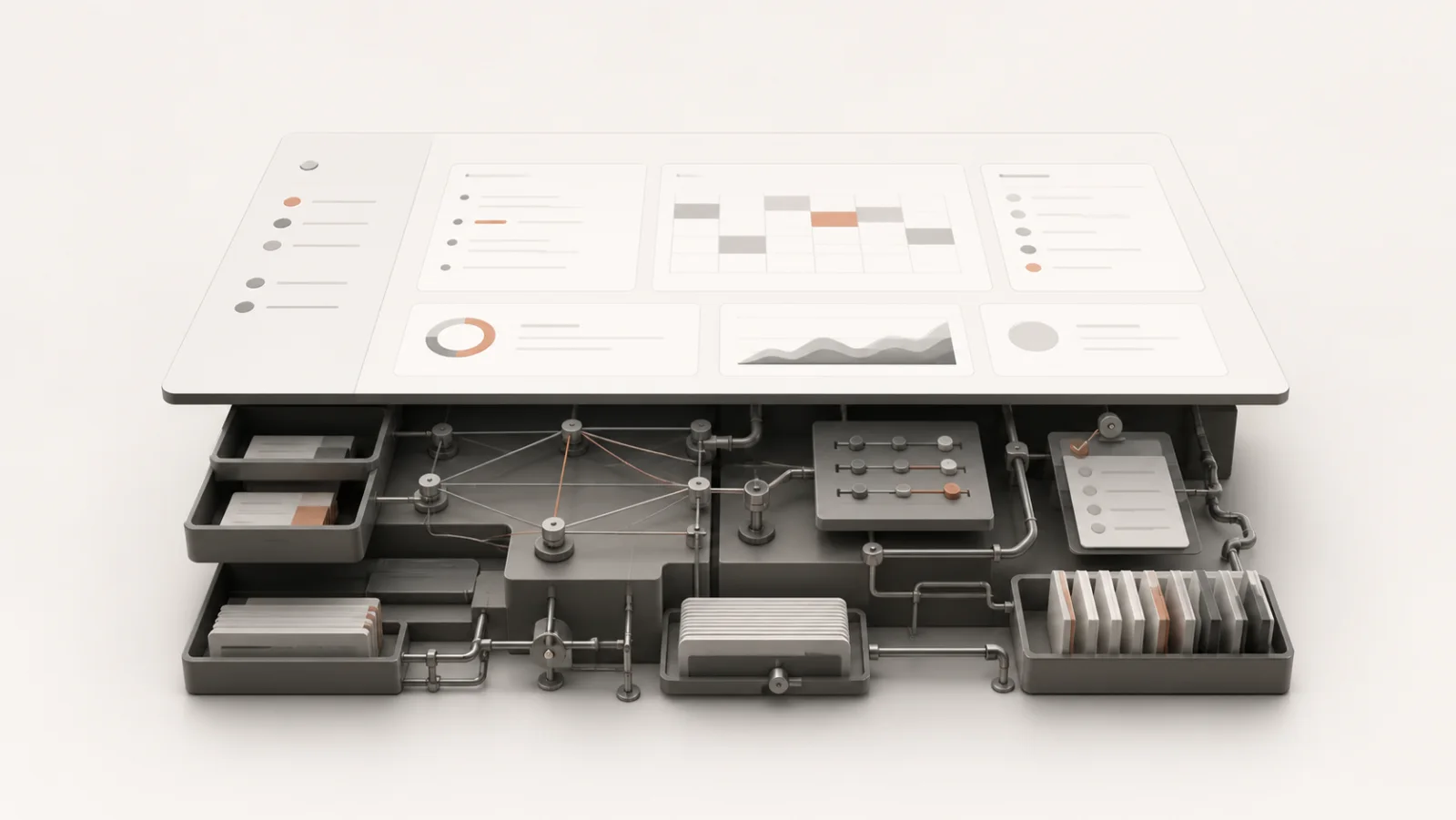
The screenshot hides the maintenance
The more fields, links, and dashboards a system depends on, the faster it drifts from reality when work gets busy. Once you stop trusting what it shows, returning to the system begins with cleanup rather than work.
Let the work create the structure
The answer is not to remove structure, but to add it when the work reveals what is needed. A useful system gives you enough shape to begin, then lets complexity appear only when the work requires it.
An action is enough structure to start. It names what you want to move forward and keeps the notes, decisions, and follow-up actions connected to that intent. A small task can remain a title; a difficult investigation can grow without first needing a template.
Organize after value appears. Instead of choosing a permanent home for every note in advance, begin with the next meaningful move. Let the action gather its context, then connect it to topics when recurring themes and lasting value become clear. This is the foundation of action-centered note-taking.
A simpler productivity system: plan, think, keep
A low-maintenance productivity workflow can follow one continuous loop. Planning provides focus, thinking produces context, and selective preservation lets useful work remain available. They are distinct decisions, but they do not need to become separate systems.
Plan only what deserves attention
Keep possible actions in the backlog until their timing matters. Bring a small number into today, keep the near future visible, and let the rest remain in the backlog. A plan should protect present attention without pretending that every future action has a reliable date. In ActionDrivenNote, actions move into Today, Tomorrow, or later only when that distinction becomes useful.
Think inside the action
Start by naming the outcome or next move: investigate a defect, prepare a proposal, compare two approaches, or write the launch brief. A title is enough. Every action in ActionDrivenNote opens into a writing space where links, observations, reasoning, decisions, and drafts can develop beside the work they support.
Real work also produces more work. Research exposes a missing fact; writing reveals a decision; a fix uncovers a follow-up. Child actions preserve the relationship to the context in which they emerged. Keeping tasks and working notes together reduces switching now and preserves the thread needed to resume later. See how to keep tasks and working notes in one place.
Keep only what proves useful
Completion should remove an item from active attention, not create a new archive job. If an action contains a decision, explanation, evidence, or reusable material, connect it to a relevant topic. In ActionDrivenNote, tagged actions remain visible as notes after completion. Routine work can simply leave active attention without adding noise to the notes you revisit.
This separates finishing from preserving. The useful part of selected work can outlast the checkbox, while ordinary tasks leave no additional maintenance behind. A more detailed selection method is covered in how to turn completed tasks into useful knowledge.
A good system should survive a messy week
The real test arrives when the week does not go according to plan. Meetings take over, priorities change, and there is no time for a careful review. When you return, can you see what matters without first cleaning an inbox, updating a dashboard, and repairing broken categories?
A resilient system remains useful even when it is not perfectly maintained. You can reopen an action and understand the situation. Notes have emerged from thinking instead of becoming a separate capture habit. Useful completed work remains available without filling the workspace with everything you have ever done.
A system that works only when perfectly maintained is not reducing your workload. It is adding another dependency to it.
Your productivity system should help you return to the work—not become the work you need to return to. When maintenance begins to take more than the system gives back, simplify the path: start with one action, keep its context close, and organize only what proves worth keeping.